
December 25th, 2025

“People are sent into our lives to teach us things that we need to learn about ourselves.”
Mandy Hale (Author; UNKNOWN)
Chapter 5: Pay Attention: The Ancestors Are Ready To Embrace You
“…you are prepared to begin incorporating the second lesson – the lesson of In Lak’ech, or paying attention to life as your reflective teacher. This Mayan teaching In Lak’ech (you are my other me) is the concept that everything in life is a reflective teaching (your other you).”
“Within this teaching, the elders would describe this lesson as life’s mirror, el espejo, or the way that life and all its experiences reflect teachings to us. This is opposed to thinking that things just happen to us or that we are victims of circumstances. …It also categorizes life’s experiences as good or bad, positive or negative, with a focus on labeling certain experiences as even pathological. It uses this judgement as a way of labeling these experiences with an emotional weight, often making us feel inadequate, ashamed, or irreparably damaged if we’ve experienced certain things. This labeling or categorization then tends to create shame in us which can attach to us forever.”
“This teaching also includes paying attention to the lessons that are brought to us by others, starting with our family. It is usually family and close relations that are our first teachers, and where the first challenges of these teachings take place.”
“In traditional times, in preparation for one’s life’s journey, the elders would observe (pay attention) to the spirit (tonal) of each child as they came into the world to identify their guiding characteristics. Some traditions even begin this process before the baby is born. Mothers often share that they can feel the spirit of the child that they are carrying during pregnancy, and how each child feels different. By way of this process, in certain cultures, elders would ascertain and then bestow specific spirit names to each child. These spirit names were often connected to an animal or ancestor spirit. …The wise elders understood that children have a tonal, or unique spirit.”
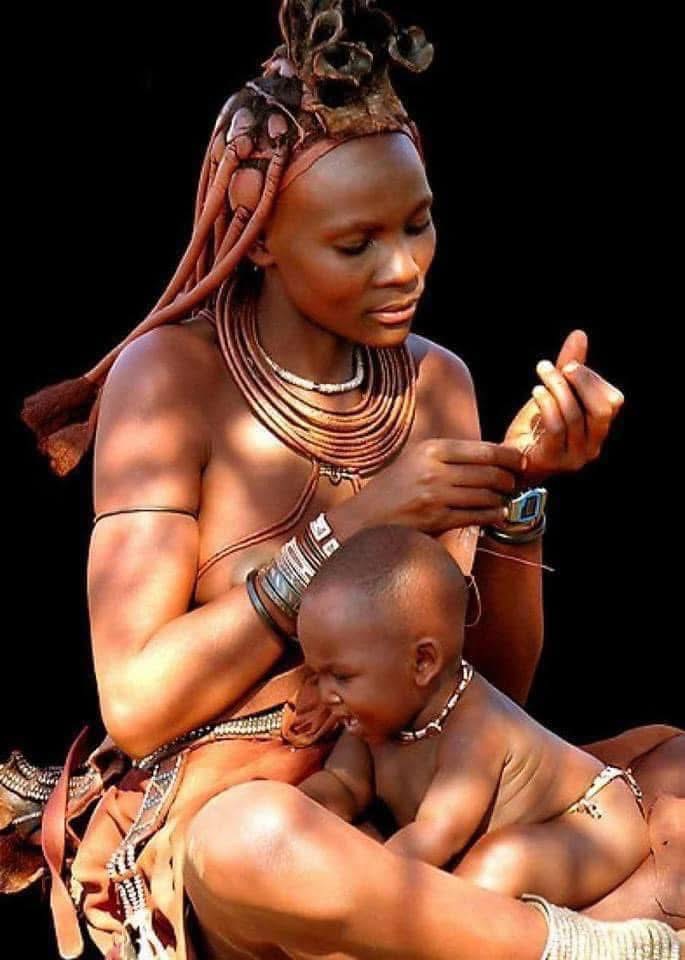
“Of all the African tribes still alive today, the Himba tribe is one of the few that counts the birth date of the children not from the day they are born nor conceived but the day the mother decides to have the child. When a Himba woman decides to have a child, she goes off and sits under a tree, by herself, and she listens until she can hear the song of the child who wants to come. And after she’s heard the song of this child, she comes back to the man who will be the child’s father, and teaches him the song. When they make love to physically conceive the child, they sing the song of the child as a way of inviting the child. When she becomes pregnant, the mother teaches that child’s song to the midwives and the old women of the village, so that when the child is born, the old women and the people gather around him/her and sing the child’s song to welcome him/her. As the child grows up, the other villagers are taught the child’s song. If the child falls, or gets hurt, someone picks him/her up and sings to him/her his/her song. Or maybe when the child does something wonderful, or goes through the rites of puberty, then as a way of honoring this person, the people of the village sing his or her song. In the Himba tribe there is one other occasion when the “child song” is sang to the Himba tribesperson. If a Himba tribesman or tribeswoman commits a crime or something that is against the Himba social norms, the villagers call him or her into the center of the village and the community forms a circle around him/her. Then they sing his/her birth song to him/her. The Himba views correction not as a punishment, but as love and remembrance of identity. For when you recognise your own song, you have no desire or need to do anything that would hurt another. In marriage, the songs are sung, together. And finally, when the Himba tribesman/tribeswoman is lying in his/her bed, ready to die, all the villagers that know his or her song come and sing – for the last time that person’s song.”
Releasing Generational Wounds And Patterns
“‘Thee are wounds that never show on the body, that are deeper and more hurtful than anything that bleeds.”
Laurell K. Hamilton (American Writer; February 19th, 1963)
“…fear-based patterns may have been passed on generationally and definitely can affect the way you see yourself, interact in your relationships, and how you parent your children. As a result, if you had parents that were stuck in these fear-based wounds, then some of you may have developed processes that mimic these behaviors. Unfortunately, some of these patterns and stressors may have resulted in some of us going through a variety of hurtful and panful childhood experiences, the residuals of which we still carry. Living in a home with wounded relations often produces patterns where one become stuck in fear, insecurity, and filled with shame.”
“The way we talk to our children becomes their inner voice.”
Peggy O’Mara (Author; UNKNOWN)
“It is an important step for all of us to intentionally acknowledge and release harmful generational trauma and oppressive patterns that have been handed down…”
Barriers To Intimate Relationships
“We all come with gifts and baggage based on our childhood experiences or generational trauma. The questions become: ‘How can we learn from those experiences without being ashamed of the lessons? Are we willing to pay attention and face the mirror of these teachings in our lives so that past hurts don’t interrupt our ability to be present in our relationships going forward?'”
“Blame keeps wounds open. Only forgiveness heals.”
Thomas S. Monson (American Religious Leader; August 21st, 1927 ~ January 2nd, 2018)
“The problem worsens when such deeply intense episodes occur and then they are not talked through or prcessed resulting in energy of trauma remaining stuck in your body, in your cell memory and attached to your spirit. This may leave you confused, uncomfortable, and with a sense of anxiety or insecurity. Years later, you are left wondering why, on occasion, you feel imbalanced or unhappy for what seems like no reason at all. Unbeknownst to you, the unresolved trauma may still be lodged in your body, attached to your spirit and may be inhibiting you from truly paying attention and being present in any relationship. In Indigenous cultures of Mexico, the medicine people call this Susto. In Western society, it may be referred to as posttraumatic stress.”
“This simple task of paying attention to what’s in front of us, to our needs right now, connects us to our true sacred purpose. This also allows us to notice when someone is disrespecting us or treating us in a dishonorable way, pay attention to what boundaries we need to set, and gives us the courage to honor our sacred-self by speaking our truth.”
In Lak’ech: Recovering Your Reflective Teacher
“The final element of this teaching of In Lak’ech, is recognizing that all of our relationships and experiences, especially the painful or difficult ones are teachers for us.”
“The Maestros/Maestras, or wisdom teachers tell us that the way to be in balance is to live in balance; to live in concert with the natural rhythm of life – the earth, wind, water, sun and moon. Rather than reacting or allowing circumstances to trigger and freeze us, we need to reconnect with the vibrations of energy that are in balance and that can heal us. Since imbalanced patterns affect us physically, emotionally, mentally and spiritually, our healing needs to transform all of these areas as well. We can begin by honoring ourselves.”
Consider The Following:
- “The sacred wind, or breath – Take time in the morning, during the day, and before you go to sleep: Take 7 sacred breaths, breathing slowly and fully in through your nose, and releasing smoothly through your mouth. Incorporate this breathing practice anytime you feel anxious or disconnected.”
- “Honoring that sacred ocean in us, the female spirit of water – It is very important for us to drink plenty of water so that we can replenish and restore our tissues, as well as detoxify our bodies from the stress and past trauma that stops our flow. It is also beneficial to go in the ocean, a river or take a bath on a regular basis, allowing the water to bless us and heal us. When we do this, it is important to do it intentionally, with the goal of detoxifying and cleansing ourselves from past wounds and hurts, and reconnecting with the sacred flowing energy of water.”
- “Staying connected to the earth – We know that foods that come from the earth are the best for us; plants, vegetables, fruits and herbs are rejuvenating and healing. In addition, we should take time to have our bare feet and hands feel and connect with the earth. Our bodies vibrate at the same energetic rhythm as the earth and the more we connect with the earth, the more balanced we will be. Some traditions will place their forehead or hands on the ground, as a way of depositing the negative energy they are carrying into the earth so it can be transformed, in only the way a mother can do.”
- “Say good morning to grandfather Sun every day – It is important that we can take some time every day to be in nature and feel the sun, as it is a natural strengthener of our spirit and source of vitamin D. By connecting to the light of grandfather sun, the light spirit within us will be fed. Bathe in the sun’s light and wear it as a protective shield around you.”
- “Honoring grandmother Moon – In addition, connect monthly to the full power of the moon’s energy. The teaching here is to allow our bodies to rest, heal, and rejuvenate. It is also important to acknowledge grandmother moon’s energy, every night, so that we can rest properly.”

Transformational Healing In Today’s Relationships
“Suffering is not holding you, you are holding suffering.”
Osho (Indian Philosopher and Mystic; December 11th, 1931 ~ January 19th, 1990)
“The first step in healing our relationships is being able to accept who we are today – to acknowledge and accept the relationships in our lives today as they are, without judgement. This doesn’t mean you have to like all people or agree with them, but you do have to know the ‘truth’ about who they are and who they are not. When you do this, it then opens up space for shifts and transformations in your relationships to take place. When you finally make this choice about the kinds of relationships you want to have, amazing things can happen.”
“Like the author, Jerry Trello, I have been impacted by my own parents wounded stories. My mom and dad both grew up as the oldest in their large families, 8 and 5 respectively. Both had the responsibility of taking care of their brothers and sisters via babysitting, household chores or employment. Both my parents had to give up their needs as children for the good and survival of the family. My grandparents leaned hard on both my parents for their support. In a large family, there was little time to tend to their own feelings or needs. It was all about the family and about what they needed them to do, especially for their siblings and their mothers. Sometimes, in a family with many children, it is difficult to find time to pay attention to each of their feelings. They were primarily trying to survive. Especially in impoverished communities like my dad, where there is a lot of stress and multiple challenges, they begin to repress or ignore those things that don’t serve their immediate needs. I witnessed this circumstantial dynamic occur for both my parents. They worked long hours and still arrived home to cook for my brother and I and doing whatever else needed to be done to run the household. Rarely did they ever express their personal feelings, other than occasional frustration or anger with situations or how we were acting, and rarely did they do anything for themselves. Growing up this created a dilemma for me because when I began interacting with my peers and visiting their households, I was learning a completely different way families interacted, past experiences of home life confused me. I remember hearing parents praising and reminding their children they were loved. As a sapio- demi creature, I keyed in on this immediately and wondered why this was only occasional in my life. It’s not that my parents didn’t love us. There was love all around us in other forms or expressions = though my parents working long hours and by the way they fed us and took care of us. Despite everything gping on in our home, there was love. I felt it, but only occasionally heard it. I heard my parents brag to others about what their children where up to, and rarely heard it in conversation directly to either one of us. I do remember having a pojnted conversation with my parents about not getting the love I needed and then they would anxiously share their love. At the time, I hated this as it felt forced because I had to ask for it. I know better now to ask for what I want and to not assume others can read my mind. It is in sharp contract to my life now where my husband and I remind one another verbally how much we love one another hundreds of times per day. Seems Like I am making up for a long overdue need. LOL! I know deep down inside of me, that my parents loved me and this is why I am sharing my love with my parents in the way I need for the past eight years. I made sure to hug my parents when we got together, make a point to sit beside them when visiting and even reach out to hold their hand which is a powerful connection for me. My parents loved hugs, and I felt at times it also made them feel uncomfortable. I know my parents knew I loved them and even so there were times when I told my parents I loved them they would seem dismissive due to how uncomfortable it made them feel. Again as a young person this was confusing and often make me feel like I was doing something wrong. What is interesting when you begin having your own children, is that you are confronted with and begin to acknowledge the person my parents were; they were also a man and woman, they have their own spirits, they have their own needs, they have their own issues and they have their own wounds. I don’t fully know either of my parents own journeys, and may never truly know or appreciate their own struggles. I think they key to my own reflection was to finally accept what path my parents had navigated as young parents, what they had sacrificed and to accept who they were/are as a total beings. To heal, I had to let go of the regret that I held about the way my parents raised me, which had kept me anchored in the past. I have been working on accepting my parents as they are, right now. I believe by paying attention and accepting them for who they are today opens a space in me and in them for the opportunity for transformation. This is the power of In Lak’ech, accepting your life in the present and paying attention to your relationships as teachers.”
“That is the significance of paying attention to who someone is in their sacred-self, acknowledging and accepting their gifts and their baggage, the duality of the darkness and the light, without judgement or criticism or expectation. Only then, are we able to live our lives by acknowledging and paying attention to oneself, and to those people and things that surround us.”
“When people can be present in their lives and pay attention to their own physical, emotional, mental and spiritual sacredness, it’s easier for them to accept themselves and others without judgment. As mentioned earlier, nature can help us to heal and grow in this process, learning to appreciate life more. To wake up and be present when the beautiful sun shines, when the rain comes to bless the plants and see the flowers in a joyous way, this is an intentional aspect of healing and glowing. It allows you to live life in a sacred way because you are now showing up, and you are paying attention to the beauty of life. And when you start to pay attention, the blessings that come are amazing.”
“You begin to see the blessings that the Creator sends you, the lessons that are there for you to grasp which allow you to see the journey that is getting ready to avail itself to you. In Lak’ech, the reflective sacred mirror, begins to show you your true path. The answers show up and the healing begins. The tings that you thought were impossible, now become possible. The visions you thought could never be realized, are now within your reach. But it is only when you begin to be present and pay attention, when you realize that the Creator, angels, ancestors, and the universe are just waiting for you; waiting so they could reveal the teachings, the lessons, the helpers, the guidance and the strength that you need to move to the next phase of your life.”
–Trello, Jerry. “Recovering Your Sacredness: Ancestral Teachings For Today’s Living”. Sueños Publications, L.L.C.. (2018). Pages 54-82.
I challenge each of you to post comments to this blog series so we all can grow together.
 My Distilled Life
“I call these spaces my pockets. I have them in various places around the house, mixed in with the detritus of living. When I unexpectedly come upon them, they delight and at the same time remind me to stop and just be for a moment, let go the mind chatter, envelope myself in the peace.”
Marion Taijala (Herriott) (Maternal Aunt; February 4th, 1946)
LikeLike