“Puttering is really a time to be alone, to dream and to get in touch with yourself…To putter is to discover.”
Alexandria Stoddard (Author & Interior Designer; November 8th, 1941)
“…puttering is a solitary pursuit, to be appreciated with an unhurried pace for maximum metaphysical benefits. The essence of puttering is rearranging…”
“Part of the pleasure of puttering is free association. Think of puttering as a domestic Rorschach test. Instead of interpreting inkblots, we muse on the hidden meaning of personal possessions until we flow on to dreams, choices, risks, pleasures, authentic preferences.”
“‘Creative puttering’ is actually one of my favorite things to do at home. It helps us to become aware of what’s still important to us, what continues to have meaning. This quiet, private act can…bring the different aspects of your life into sharp focus—and identify your needs.”
Alexandria Stoddard (Author & Interior Designer; November 8th, 1941)
“I pretty much putter every season change.”
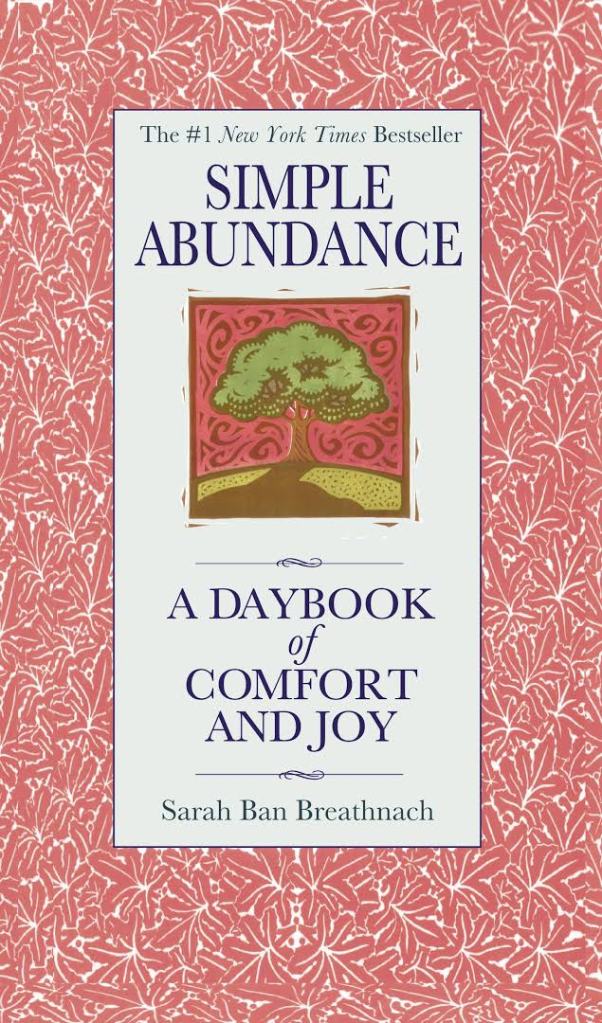
–Ban Breathnach, Sarah. “Simple Abundance: A Daybook of Comfort and Joy”. Grand Central Publishing. (1976). Kindle Page 167 to 169 of 501.
I challenge each of you on this blog series to post comments so we all can grow together.
Frances Quarles (English Poet; May 8th, 1592 to September 9th, 1644)
“This month we turn our attention homeward, as we continue to weave simplicity into our daily round while reacquainting ourselves with the transformative power of the third Simple Abundance principle—Order.”
Everyday Epiphanies
“Today a new sun rises for me; everything lives, everything is animated, everything seems to speak to me of my passion, everything invites me to cherish it.”
Anne de Lenclos (French Writer; November 10th, 1620 to October 17th, 1705)
“We should write an elegy for every day that has slipped through our lives unnoticed and unappreciated. Better still, we should write a song of thanksgiving for all the days that remain.”
“…we’re startled into consciousness by an unforeseen threat to something that we hold dear and have been taking for granted. I call these luminous moments ‘everyday epiphanies,’ because they jar us into a profound awareness of how much we have, and how much we have escaped, and how much there is to be grateful for.”
“Everyday epiphanies encourage us to cherish everything. Today a new sun has risen. Everything lives. Everything can speak to your soul passionately if you will be still enough to listen.”
“You have to count on living every single day in a way you believe will make you feel good about your life, so that if it were over tomorrow, you’d be content.”
Jane Seymour (British Actress; February 15th, 1951)
“Being present for every breath IS the juice of life. Using up all the day and living each day like it is the best party ever is the key! Neil and I have a party everyday…intimate connection, marvelous cocktail, scrumptious dinner and holding hands watching our favorite cooking shows together IS our life juice.”
–Ban Breathnach, Sarah. “Simple Abundance: A Daybook of Comfort and Joy”. Grand Central Publishing. (1976). Kindle Page 141 to 142 of 501.
I challenge each of you on this blog series to post comments so we all can grow together.
“Intuition is a spiritual faculty, and does not explain, but simply points the way.”
Florence Scovel Shinn (American Artist & Book Illustrator; September 24th, 1871 to October 17th, 1940)
“Intuition has been called our ‘sixth sense’ and is often an ability ascribed to women.”
…believed that the intelligence that “arises out of sex and beauty is intuition.”
D. H. Lawrence (English Novelist & Short Story Writer; September 11th, 1885 to March 2nd, 1930)
…feminine intuition was a result of our “age-long training in human relations.”
Margaret Mead (American Cultural Anthropologist and Author; December 16th, 1901 to November 15th, 1978)
“Intuition is the subliminal sense Spirit endowed us with to maneuver safely through the maze that is real life. Wild animals rely on their intuition to stay alive; we should reply on ours to thrive.”
“It is only by following your deepest instinct that you can lead a rich life and if you let your fear of consequence prevent you from following your deepest instinct then your life will be safe, expedient and thin.”
Katharine Butler Hathaway (American Writer; 1890 to 1942)
“One such intuitive signal is the emotional trembling that accompanies creative discovery or warns us not to take an action. Another intuitive message breaks through when we suddenly grasp that to try something new might be delightful; we do so and are surprised by joy. A third intuitive nudge occurs through revelational the inner knowing that helps us arrive at the right place at the right time so that we can be swept away by the benevolent flow of synchronicity that gets us where we’re meant to be as easily as the Universe can arrange it.”
“…one in whom persuasion and belief/Had ripened into faith, and faith become/A passionate intuition.”
William Wordsworth (English Poet; April 7th 1770 to April 23rd, 1850)
“I have always had a strong intuitive sense of my experience of the world. It has served me well and I trust it. Combined with my synesthesia, I feel bolstered by my intuition in understanding and navigating my world.”
–Ban Breathnach, Sarah. “Simple Abundance: A Daybook of Comfort and Joy”. Grand Central Publishing. (1976). Kindle Page 135 to 136 of 501.
I challenge each of you on this blog series to post comments so we all can grow together.

Francis Thompson (English Poet; December 16th, 1859 to November 13th, 1907)
“Touch is the first physical sense we experience as strange hands pull us from the dark realm of the soul into the cold, harsh light of earth. After the security and warmth of the womb, frigid air assaults our fragile, naked bodies until we find comfort in our mother’s arms with the sense of touch guiding our first few conscious moments. For many people touch is also the last sense we experience as we depart the world—the squeeze of a loved one’s hand. Sight, smell hearing, and taste have gone before us.”
“The first sense to ignite, touch is often the last to burn out, long after our eyes betray us, our hands remain faithful to the world.”
Frederich Sachs
“We describe our mood swings as ‘feelings’ and when something strikes a deep, sentimental chord in us we say we were ‘touched.’ When we feel alienated, fragmented, and adrift, we often refer to this estrangement as ‘losing touch with reality.'”
“…we all need to be hugged and touched, not just to thrive but to survive.”
“‘sensuist’ (someone who delights in sensory experiences, as opposed to a ‘sensualist,’ someone who is excessively concerned with physical gratification).”
“She seemed a thing that could not feel/The touch of earthly years.”
William Wordsworth (English Poet; April 7th 1770 to April 23rd, 1850)
“Let us become women who embrace our portion of earthly years with a passion by delighting in our sense of touch.”
“I am very aware how much touch is a huge part of my aliveness. I need it to remain balanced centered and well. For huge portions of my life I went without touch. Being a mother afforded me more regular dosing, However, choosing my lover and life partner was the pivot into a chronic blissful state that has been unmatched…ever. When a child, I was disconnected from touch as it was not a regular occurrence by my mother. Often perfunctory in nature and performative. My thought is that she experienced less touch as a child too. My dad was much more affectionate, but also metered. I think he knew instinctively he needed touch to remain balanced. Sometimes he would just reach out to hold my hand and at the time, I needed that too. This brings tears to my eyes as I write this…’I miss you dad.'”
–Ban Breathnach, Sarah. “Simple Abundance: A Daybook of Comfort and Joy”. Grand Central Publishing. (1976). Kindle Page 134 to 135 of 501.
I challenge each of you on this blog series to post comments so we all can grow together.
“The body is shaped, disciplined, honored, and in time, trusted.”
Martha Graham (American Dancer and Teacher; May 11th, 1894 to April 1st, 1991)
“The world as I know it is divided into two types of women–those who exercise and those who don’t.”
“Those who do exercise seem to have more energy, less stress, fewer weight problems, and generally a more positive and optimistic outlook on life. Women who are fit will tell you that regular exercise is the single most important thing they have ever done to improve their life.”
“Women who do not exercise don’t believe them and have every excuse in the world for why they can’t or won’t find out for themselves: they don’t have the time, they’re too out of shape, they’re coming down with the flu, it’s too cold or too hot, they’re too tired, they’re too depressed, maybe next week.
“Whenever I feel like exercise, I lie down until the feeling passes.”
Robert Maynard Hutchins (American Educator and Former Chancellor of the University of Chicago; January 17th, 1899 to May 17th, 1977)
“This is not good. This is not self-nurturing. This is not healthy. We know this intellectually.”
“Don’t refer to the activity as exercise or fitness any longer. If you must call it something, call it creative movement.”
“Think of creative movement as a life-enhancing, enjoyable pastime, because it is. Just pause for a moment and imagine all the ways that you could move creatively that bring you pleasure: dancing (ballet, jazz, or tap), swimming, fencing, horseback riding, racquetball. tennis, golf, riding a bike. …Start moving, a step at a time, step after step. The positive momentum will take if from there.”
“With enlightenment and self-awareness, we can reguide and realign our whole selves: our bodies, by finding new ways of moving and celebrating them and by adding good food in amounts they tell us they need; our souls, our sense of ourselves as good and worthwhile, by connecting them to the earth and to each other.”
Diana Roesch (Theater and Film Producer)
“I have always loved movement and feel more of myself when moving. I have learned to move in new ways in this chapter of my life. Specifically, my husband introduced me to rowing regularly which eases the stress on aging joints. BRILLIANT! I had coached rowing for years and in all that time, I rarely participated. Now I have an rowing ergometer in our living room. WINNING!”
–Ban Breathnach, Sarah. “Simple Abundance: A Daybook of Comfort and Joy”. Grand Central Publishing. (1976). Kindle Page 119 to 120 of 501.
I challenge each of you on this blog series to post comments so we all can grow together.
“The body must ne nourished, physically, emotionally and spiritually. We’re spiritually starved in this culture–not underfed but undernourished.”
Carol Hornig
“When I first became aware that when I ‘swallowed’ life I was really hungry and thirsty for joy and serenity, it was a turning point for me in learning self-nurturance. Finally, I understood that I wasn’t underfed but spiritually undernourished. I realized I could go within and ask my soul–my authentic self–what I needed. I learned to stop and ask myself the questions ‘How can I care for you? What is it you truly need?'”
“As you nurture your spirit with kindness, your physical cravings will loose their grip.”
“Realize today that your hunger and thirst for a reason. Ask your authentic self to reveal your deeper needs, so that Spirit can quench and satisfy your parched and ravenous soul.”
“I love food for all the ways it flirts with me in smell, taste, texture and sight. I used to only look as food as fuel and from a lens of scarcity. I have never been an overeater, more of a grazer. I eat when I’m hungry. I often get engrossed in whatever I am up to and forget to eat until my project is done. When this happens, I assess what my body needs and take in the fuel my body is demanding…usually protein. I really have never been much of an emotional eater. I notice more my desire based on cravings which usually point out other deficiencies in my daily diet. I do my best to listen.”
–Ban Breathnach, Sarah. “Simple Abundance: A Daybook of Comfort and Joy”. Grand Central Publishing. (1976). Kindle Page 118 to 119 of 501.
I challenge each of you on this blog series to post comments so we all can grow together.
“Self-love is the only weight-loss aid that really works in the long run.”
Genevieve Marie Craig (Jenny Craig) (American Businesswoman; August 7th, 1932)
“…food is not our enemy. If we’re alive, we’re supposed to love to eat. Food is the source of vital fuel our bodies convert to energy in order to survive.”
“Don’t fight your hunger. Instead, respect it and respond to it with nutritious food that appeals to all your senses–not just taste but sight and smell as well.”
“..the more we starve ourselves, the more weight we eventually gain, and then we end up hating ourselves.”
“The only way to stop this heartbreaking cycle of self-loathing is to stop dieting and use our common sense. Eat when you’re hungry, drink when you’re thristy, sleep when you’re tired, get in harmony with your body through regular exercise, and nourish your soul through prayer and meditation.”
“Be really whole, and all things will come to you.”
Lao-Tzu (Chinese Philosopher; 571 B.C.)
“Taoism–the Eastern philosophy of Lao-Tzu–teaches that the only way to be made Whole is to yield. Yield to the fact that your body answers to a Wisdom that’s higher than wanting to look like the waif on the cover of Vogue.”
“Every woman has an ideal weight that’s ideal for her opposed to an ideal weight. This is the weight at which you feel the most comfortable, have the mot energy, can stay well and feel good about how you look. We can achieve that weight whenwe begin to trust our bodies. Forget size and abandon the scale. Instead, of weighing yourself, let your favorite clothes tell you how you are doing. Above all, trust the guidance of your authentic self. Go within and visualize her. See what weoght she carries. Ask her to help you achieve your perfect weight through the power of Love. Today, be willing to believe that self-love is the only weight-loss aid you’ll ever truly need, because it’s the only one that works.”
“All of this advice is true. For the last 30+ years I have been counseling and working alongside all types of people desiring to get to their full potential. Whether that be weight, athletics, mental toughness, etc. they all had to let go or yield to what they thought they knew and listen to their bodies.”
–Ban Breathnach, Sarah. “Simple Abundance: A Daybook of Comfort and Joy”. Grand Central Publishing. (1976). Kindle Page 117 to 118 of 501.
I challenge each of you on this blog series to post comments so we all can grow together.
“The body is a sacred garment. It’s your first and last garment; it is what you enter life in and what you depart life with, and it should be treated with honor.”
Martha Graham (American Dancer and Teacher; May 11th, 1894 to April 1st, 1991)
“Which comes first, learning to love our bodies or possessing a positive body image?”
“If you can learn to like how you look, and not the way you think you look, it can set you free.”
Gloria Steinem (American Journalist and Social Activist; March 25th, 1934)
“Don’t wait for the world to celebrate you. Carve your own niche. Focus on what’s great, forget what’s not. Find joy in your own reflection. Instead of obsessing about a body that’s impossible to achieve without a personal trainer, begin to discover how you can feel better about living in the on e you now inhabit.”
“A woman’s relationship with her body is the most important relationship she’ll ever have. More important than husband, lover, children, friends, colleagues. This isn’t selfishness–it’s just fact. The body is, quite literally, our vehicle for being–for giving, for loving, for moving, for feeling–and if it doesn’t work, it’s fairly certain that nothing else in our lives will work, either.”
Diana K. Roesch (Health & Fitness Expert; December 2nd, 1963)
“Today, instead of hating your body, make peace with it. Choose to consciously love and honor the sacred garment Spirit provided for this lifetime’s journey.”
“I am so appreciative that my genetics and health active lifestyle has yielded me youth beyond my years. I have always liked my body and valued the movement it has been able to experience. I have counseled many young teens to adult women on body image for over 30+ years. On this path, the main culprit preventing women from achieving their health and wellness goals has largely been their own invisible conversation in their head about body image and self-love. For those who were able to share honestly with me how they saw themselves, I was able to help be their advocate and accountability partner in changing both behavior and their physical appearance. For those looking for a gimmick or a quick fix, they largely stayed trapped in their own story and thus their insides tended to match there outsides. It is not magic, it IS self love and grace for the garment that the Universe gifted you to wear in this life journey. Take care of it and it will take care of you. Use it or lose it.”
–Ban Breathnach, Sarah. “Simple Abundance: A Daybook of Comfort and Joy”. Grand Central Publishing. (1976). Kindle Page 116 of 501.
I challenge each of you on this blog series to post comments so we all can grow together.
The origins of Native American healing practice and ceremony are as diverse and rich as each of the hundreds of American tribes themselves. Nature has provided gifts that have been an important thread between native people and their spirituality. The Four Sacred Medicines (Tobacco, Cedar, Sage & Sweetgrass) have a historical and continuing cultural value to the spirit, physical & emotional well-being of native peoples.
Tobacco
Tobacco is shared as a gift, an offering to elders, healers and creator. Tobacco has a long-standing cultural history among native people, recognized as the first gift the creator bestowed upon the native people. As a ceremony in the sharing of the sacred peace pipe, tobacco symbolizes harmony & peace among those that share it with each other and their creator. Tobacco is an essential sacrament of Native American spiritual ceremony.
However, commercial tobacco used habitually is a carcinogen when consumed as a cigarette. As a result native people have sought to use naturally grown tobacco as part of spiritual sacrament. As the tobacco industry has historically engineered cigarettes to deliver nicotine as an addictive agent, tribes have looked to discourage the consumption of commercial cigarettes and nicotine for it’s addictive properties. “Nicotine has a pharmacological effect that crosses the blood-brain barrier intact.”*
It is believed that the movement to distinguish the use of Nicotiana Tabacum (commercial) versus the use of Nicotiana Rustica (traditional) began when native peoples sought to have traditional ceremonies with traditionally raised tobacco. Before the American Indian Religious Freedom act of 1978 it had been illegal to perform public native ceremonies with tobacco. As the commercial use (and abuse) of tobacco consumption became an abusive habitual culture, the need to appropriate traditional tobacco use in ceremony became greater.†
*Source: Dr. Jeffrey Wigand. †Source: American Indian Community Tobacco Project
Cedar
Cedar wood has antioxidant, antibiotic and anti-inflammatory properties and can be used to purify your home. It has restorative uses when mixed as a tea, where it can aid in fighting infections. Cedar is used in sweat lodges and is often used in smudging. Western Red Cedar leaves have long been a popular internal and external medicine for painful joints among Coastal Native Peoples. They have also been infused for cough medicine, tuberculosis and fevers. The leaves make wonderful incense and are used in smudging for purification.
Cedar is a powerful antimicrobial. Reflect on where it lives: cool wet forests where fungi and molds thrive. When you scratch cedar leaves or cut the wood, strong essential oils are released. These oils are cedar’s medicine to repel insects, molds, fungi, bacteria and viruses. Our ancestors discovered this long ago and used cedar’s medicine in and on themselves to ward off external forces.
Cedar leaf is a useful anti-fungal for skin and nail fungus. The tincture, infused oil or salve can be used topically and should be applied 2-3 times a day until a week after the fungus disappears. Fungal infections are pernicious and need to be treated aggressively. You can also soak your feet in cedar tea by steeping a cup of dried cedar leaves in about 10 cups of hot water. Let the tea steep until it is warm, and then place it in a bowl or basin large enough for your feet. Soak your feet for 10-15 minutes – a nice activity when you are reading or watching television.
Cedar promotes immune function through helping white blood cells to work better. By stimulating our immune cells to fight infection, clean up debris and denature cancer cells, we are keeping our tissues healthy. Doing several cedar steams a day can help to clear respiratory infections. You can also drink cedar tea by steeping a tablespoon of fresh or dried chopped cedar leaf per cup of water. Many herbalists prefer to steep cedar in cold water and let it sit for several hours or overnight. You only need to drink 1⁄4 to 1⁄2 cup twice a day to get a medicinal effect.††
The Origin of Cedar, The Grandmother Medicine • An Anishinaabe Aadizookaan (Sacred Story)
Long ago gete-Anishinaabeg lived in a time where the breath of forever life stopped. People got sick, at this time Nanabush was grieving the loss of his friend, and it was Nanabush doing that with his door way open. In another village, a grandmother loved her people and cared for the sick. She did everything she could for her community and help them recover, but she too became ill. In her fasting state the creator spoke with her about her love for the people. She returned and died that morning, then her body was placed in the woods. Her body grew out of the ground as medicine. The wind spirit blew her medicine into the air and the rain covered the people. The people remember this smell and medicine. Cedar, the grandmother that loved her people. – Story told by: Ogimaa Wab
Sweetgrass is the sacred hair of mother earth. It can be used as a purifying herb, as incense in smudging. Herbal tea made from the leaves has been used to treat coughs, sore throat & fever. Sweetgrass is a perennial that grows in the northern hemisphere of North American, Asia & Europe. The dried leaves are also used medicinally in herbal teas and essential oil can be distilled from the plant which is then used as a seasoning in foods and alcoholic beverages.
Sweetgrass has a vanilla scented aroma and contains coumarin, which gives the plant its characteristic scent. Coumarin has blood-thinning properties and some research has shown that coumarin and related compounds can be effective in reducing high-protein edemas, especially lymphedema. Though Coumarin in high doses is considered a carcinogen and is used as a flavoring agent in pipe tobacco, but is banned by the FDA as an additive to cigarettes.**
It is said that the sweet-smelling smoke cleanses the spirit and brings sacred messages to the higher planes of existence. It is said that “Wakan Tanka” (Great Spirit) understood messages better if delivered by smoke than those said with words.***
** Source: The Herbal Resource (www.herbal-supplement-resource.com) **Source: http://www.mcgill.ca
Marty Stomping-Elk
The elders tell us that it takes longer for us to heal today and the reason is because the old trails our ancestors used to find us have been destroyed….
So now our ancestors are having a hard time finding us to help us heal.
We are also told that was the first plant to grow on Mother Earth. When we harvest Sweetgrass, we get three bunches of seven strands. So there will be 21 pieces of grass, we do not pull it, this is the hair of Mother Earth. We braid the three strands of seven pieces right there on Mother Earth . Then we gently cut it if we want to state our intentions, we can bring tobacco, to show the Creator in our words, how we will use the Sweetgrass. We can offer something the plant can use, like water to the relations around it, it’s brothers and sisters, mother and father and so on, give them a gift of water.
When we burn Sweetgrass, remember these things: Its a kindness medicine…with a sweet gentle aroma when we light it. Its symbolic…there are 21 strands used to make a braid…
the first 7 strands represent those 7 generations behind us. Our parents. Our grandparents. Our great grandparents and so on for 7 generations behind us – Who we are and what we are is because of them – they’ve brushed and made the trails we’ve walked up until now… but the trails have been destroyed, we’ve lost our connection. The time has come to heal and reconnect with our ancestors.
The next 7 represent the 7 sacred teachings…Love, Respect, Honesty, Courage, Wisdom, Truth and Humility
The elders tell us how simple, powerful and beautiful the teaching are:
Love: unconditional affection with no limits or conditions that starts with loving yourself.
Respect: due regard for the feelings, wishes, rights or traditions of other, with consideration, thoughtfulness, attentiveness, politeness, courtesy, civility, deference.
Honestly: have a character of integrity, and honor be free from fraud or deception, legitimate truthful.
Courage: bravery, permitting one to face extreme dangers with boldness withstanding danger, fear or difficulty.
Wisdom: the quality of having experience, knowledge and good judgment the quality of being wise.
Truth: the face of the matter, veracity, sincere, candor and genuineness a determined in principle entirely by how it relates to things.
Humility: freedom from pride or arrogance, being humble, when we truly understand the teaching of humility, that we are not any better then anyone else and you are not any better then me. That at the end of the day we are simply human beings, this is what makes this teaching powerful and beautiful.
The last 7 strands are those of the 7 generations in front of us. Our children. Our grandchildren. Our great grandchildren. As well as those children yet to be born. It is important because everything we do to Mother earth will one day effect them… We have lost our way, Mother Earth gives us everything we need to heal ourselves and the Earth. We must go back to our roots and bloom.
Sage is a plant that is native to southern Europe and the Mediterranean region but has been naturalized to other warmer temperate climates, including North America. Sage is often used for smudging and as a preparation for ceremony.
Traditionally, the leaves have been made into a poultice and used externally to treat sprains, swelling, ulcers and bleeding. It was also commonly used in tea form to treat sore and it is also considered one of the good herbs for the coughs. Sage is considered by many herbalists to be a useful medicinal herb for treating eczema, canker sores, halitosis, gingivitis.
Garden Sage (Salvia Officinalis) has shown anti-fungal, antiviral, anti-oxidant and anti-bacterial properties that make it a useful weapon in combating many illnesses. Garden sage may be helpful in Type II diabetes for lowering blood sugar levels through Insulin support (although only a mild effect). Garden sage may be taken in tea form, added to foods while cooking, added raw to salads and sandwiches.
The herb can be found in tablet/capsule form. The recommended dosage is usually 400 mg taken one to three times daily. For all commercial products containing sage, the manufacturer’s instructions should be followed. The herb has also its uses in aromatherapy.√
√ Source: The Herbal Resource (www.herbal-supplement-resource.com)
Harvesting Male and Female Sage
Male sage and female sage have features that distinguish them from one another. Male Sage known as Buffalo Sage, is stemmed with leaves, while the Female Sage is stemmed with flowers. Male Sage is most commonly used in Anishinaabe medicine. Female Sage contains seeds that produce the next year’s crop. So it is important not to disturb the Female Sage root and allow the plant to flourish to sustain its growth through time. When picking Sage it is a tradition to offer a gift like Tobacco or a Smudge as thanks.
“Don’t you love it when some incredibly beautiful woman like Linda Evans or Cindy Crawford tells us that the real beauty secret is finding your inner light? No shit. But I’ve done the dame things these women have done to find my inner light and while it’s true I’m happier, I still don’t look lie them.”
Marianne Deborah Williamson (American Author, Spiritual Leader, and Political Activist; July 8th, 1952)
“We can’t all look like Linda Evans or Condy Crawford, but we can each look our best. Simplicity plays a part in striking the right chord of self. This occurs naturally as we begin to rethink how to put together our best look. Our authentic look. Gradually we learn that the ‘less is more’ approach applies to makeup and fashion as well as to decorating and entertaining.”
“Ironically, this desire to look our best comes after we have committed to our inner work. As we go within, searching for spiritual groth, we begin to blossom on the outside. Time well spent in meditation gives us more serenity, and it shows on our faces. Learning to love ourselves exactly as we are gives us motivation to move forward…”
“Why does working on our inner beauty produce outward charm? Perhaps it is because the two are inexorably connected.”
“As is inner, so is the outer.”
Gnostic axiom
“Women who realize thei full potential delight the Great Creator with their brilliance.”
“Before my story began…” (Heather Houston 3-20-22)
1972 Me…at my Aunt Carrie’s Baby Shower
“I have mostly ignored or underestimated my outer beauty. My story whispered to me that I was unlovable, unworthy, not enough. I pursued my inner beauty in hopes of others seeing me and being able to overlook my outward packaging. Ho-Hum…not what I wanted my life to be. I want to feel beautiful inside and out. I strive to work on my own self-image daily.” (Heather Houston 3-20-22)
“I am really at a point where I genuinely like my inside and out. With love in my life for the first time where I can give it freely and receive it without reasons, I am feeling happier and more beautiful than ever. I really love my 50s and my 60s are going to be smashing!”
–Ban Breathnach, Sarah. “Simple Abundance: A Daybook of Comfort and Joy”. Grand Central Publishing. (1976). Kindle Page 86-87 of 501.
I challenge each of you on this blog series to post comments so we all can grow together.