
March 18th, 2026
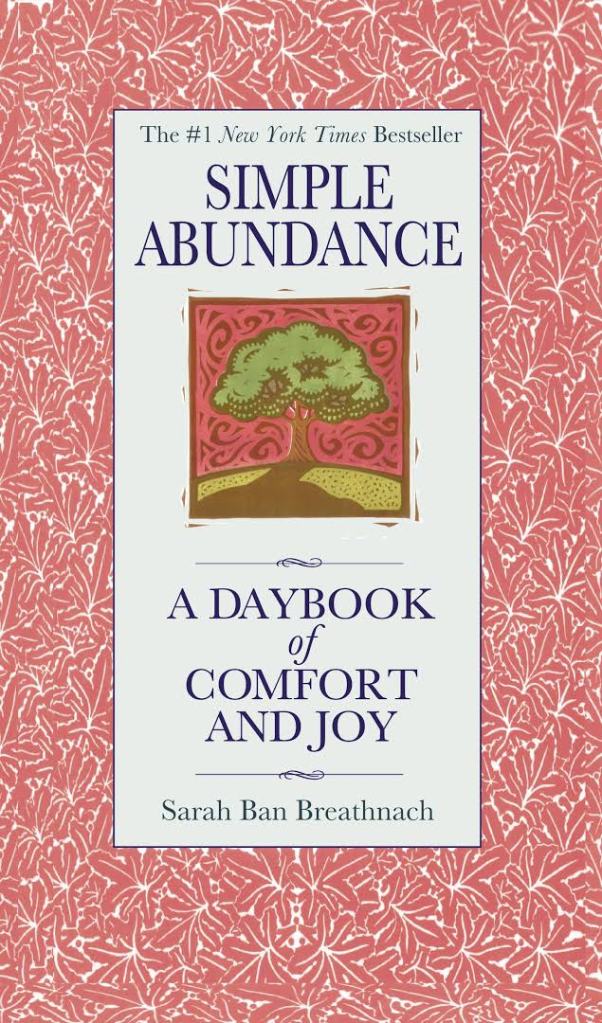
Awakening Sleeping Beauty
“We are the hero of our own story.”
Mary Therese McCarthy (American Novelist, Critic and Political Activist; June 21st, 1912 ~ October 25th, 1989)
“In every one of us there lies a sleeping beauty waiting to be awakened through love. Because she has dlumbered for so long, she must be awakened very gently. But instead of waiting for Prince Charming to storm the palace gates, you must summon the magic powers of your authentic self to break any cruel enchantment that has left you unaware of your own glory.”
“It’s hard to tell our cad luck from our good luck sometimes. Hard to tell sometimes for many years to come. And most of us have wept copious tears over someone or something when if we’d understood the situationbetter we might have celebrated our good fortune instead.”
Merle Shain (Canadian Author and Journalist; 1935 ~ 1989)
“What was your spindle? Was there a moment when you pricked yourself and fell into a deep slumber? Or did you just slowly shut down? Perhaps the cruel enchantment was caused by overly critical parents,…”
“It is time to awaken, sleeping beauty. Your creativity, imagination, and authentic sense of style are far superior to any sorcerer’s spell, no matter how strong.”
“One can never change the past, only the hold it has on you, and while nothing in your life is reversible, you can reverse it nevertheless.”
Merle Shain (Canadian Author and Journalist; 1935 ~ 1989)
“Before my story began…” (Heather Houston 3-18-22)
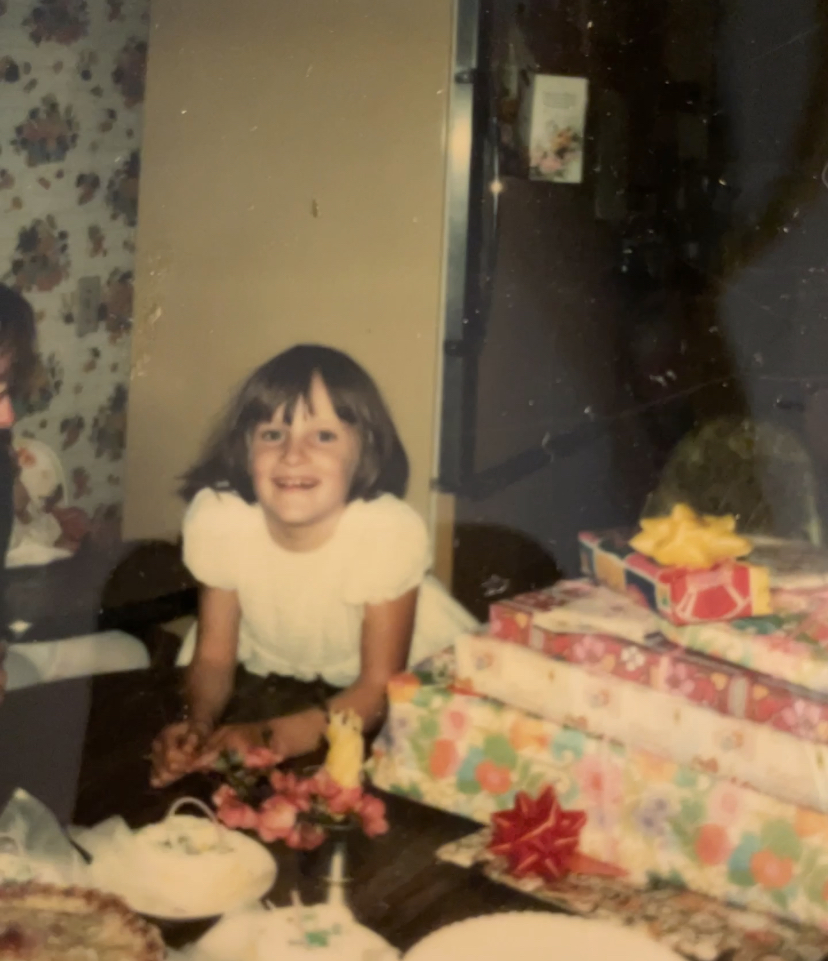
“My finger prick moment happened shortly after the picture above…around 3-4 years old. My parents were showing pictures of myself and my brother as newborns. My parents shared with my aunts and uncles how “squished” I was from birth and that my father thought I looked like a monkey. From then on, I made up meaning about this moment. I believed that the two most important people in my life who was supposed to love me, left me distrusting of love and I labeled myself as not human and not enough. I have lived in that context my whole life. Very sad to admit, but I believe now that the past doesn’t exist and I no longer have to be trapped by this unreality. I must work on this every day…every moment to remind myself that I am worthy…even to myself.” (Heather Houston 3-18-22)
“I recently read an article in Psychology Today about Cold Mother/Parent Syndrome and how it affects their children. Both my brother and I experienced many of the symptoms from our childhood. My brother took on some variations different from my own likely due to his birth number, him being male and him being a planned birth. However, below are only a few of the symptoms I experienced and how I interpret my brother’s experience. This sharing an awareness is not to be malicious, and it is necessary to name it to move past it. I can’t control others and how they take responsibility for their own baggage. I do have a responsibility to myself and those I love to process and move through this pain and drop the expectations of a relationship that really doesn’t exist on a substantive level. I was the catalyst that changed my parents life and dreams. My mother especially shared how I came along and prevented her from pursuing medical school. My brother was the perfect Gerber baby and I felt invisible. I resented my brother for so long and didn’t realize we were both just surviving in an unhealthy relationship with our mother and father. Even as I write this I mourn that I am not a priority to my mother. She has excuses for why she is unable to communicate and share with me. This is nothing new, excuses are the reasons for her lack of loving behavior. She has not put in the time to work on her own baggage with her own mother who also perpetuated the Cold Mother Syndrome. This is a generational trauma that just keeps getting passed to each new generation. I am naming it and speak the truth loudly to attempt to prevent this cycle from repeating. Maybe seven generations forward, this trauma will be healed and for now, I am committed to healing myself.” (Heather Houston 3-18-26)
“Cold mother syndrome describes a pattern of parenting marked by emotional unavailability, distance and neglect, leaving their children feeling neglected, unimportant, and unloved. This causes severe, long-term psychological damage to a child’s self-esteem, attachment, and development. It is recognized as a profound form of childhood trauma and relational trauma.” (Heather Houston 3-18-26)
“SIGNS
- Emotional Distance/Lack of Affection: Unresponsive to a child’s emotions or needs, often appearing cold or distant.
- Robotic Interaction: Parenting is often transactional, appearing cold, rigid, or inauthentic, like wearing a ‘mask.’
- Victim Mentality: A tendency to act as the victim if confronted about their emotional distance.
- Lack of Empathy: A tendency to struggle to understand how their own children are feeling and may not seem to care or act to help with their own children’s needs and emotions.
- Disengagement: Not showing interest in their children or adult children’s activities, hobbies, or achievements.
- Rarely Offering Praise or Support: Rarely encourage or acknowledge their children’s successes to the children. Transactional praise to others to uplift their own self-interests.
CAUSES
While not an excuse for abuse, potential reasons for this behavior often stem from the mother’s own history, including her own upbringing with unavailable parents, a history of trauma, and/or a lack of developed emotional intelligence.
- Unresolved Past Trauma: Parents who’ve experienced trauma in their own lives may have difficulty forming emotional connections with their children.
- 🧠I believe my mom suffers from past traumas which are completely unknown to myself as she has never shared her own challenges growing up and through adulthood.
- Mental Health Issues: Conditions such a depression, anxiety, or personality disorders can impact a parent’s ability to engage emotionally with their children. This can lead to the parent becoming unresponsive to their children’s needs.
- 🧠I have considered for a long time that my mother suffers from depression.
- Lack of Emotional Awareness: Some people, especially those who had emotionally withdrawn parents themselves, may not know how to express their feelings. This can make it difficult for them to be there for their own children.
- 🧠My mom was the oldest of 8 children and I definitely see how she too was forced into roles at young age when she needed more emotional support. I remember hearing my mom speak about having to help raise her siblings and that when she left for college she felt resentment from her own mother.
EFFECTS
- Low Self-Esteem and Self-Worth: Children often grow up feeling unlovable or unworthy of affection.
- Attachment Issues: Struggles with forming close trusting relationships, often experiencing fear of intimacy or fear of abandonment.
- Emotional Dysregulation; Difficulty recognizing or expressing emotions in healthy ways.
- Mental Health Issues: Increased risk of depression, anxiety, and complex PTSD (CPTSD).
- Physical Health Issues: Potential for higher stress levels and faster cellular aging due to chronic stress.
- Perfectionism or Overachievement: In an attempt to gain their parent’s approval or compensate for the lack of affection, some children might push themselves to excel at the expense of their own wellbeing.
- Chronic Feelings of Loneliness and Isolation: Children who don’t receive adequate emotional support from their parents might grow up struggling to feel connected to others.
HOW TO HEAL
- Seek Therapy: Professional help, such as Cognitive Behavioral Therapy (CBT), can help treat the trauma and develop emotional intelligence.✅
- Reframe Your Narrative: Shift you perspective from being ‘unworthy’ to realizing that neglect was not your fault.✅
- Establish Boundaries: Protect your emotional well-being by setting firm, healthy boundaries with the parent.✅
- Practice Self-Care: Focus on nurturing yourself and building a healthy, loving inner life.✅
- Build a Supportive Community: Cultivate relationships with friends and family who provide the warmth and validation you didn’t receive growing up.✅
CAN A COLD PARENT CHANE THEIR BEHAVIOR?
They can change their behavior, although it requires awareness, effort, and, oftentimes, professional support. Many people don’t change their behavior. However, if they’re going to try to change, the first step is recognizing their actions and the impact they’ve had on their own children and the people around them. Professional help can help address underlying issues, such as past traumas, mental health problems, etc.” (Heather Houston 3-18-26)
–Ban Breathnach, Sarah. “Simple Abundance: A Daybook of Comfort and Joy”. Grand Central Publishing. (1976). Kindle Page 84-85 of 501.
I challenge each of you on this blog series to post comments so we all can grow together.
 My Distilled Life